Live shows, movie nights, art openings, private parties, and corporate meetings at 20 N Main St — minutes from the University of Florida and Shands Hospital.
Stay in the Loop
Get the next show, screening, and event announcements sent to your inbox.
Inside the Room
A look at the stage, the floor, and the nights that move through them.

Local art for a wedding at The Wooly
For couples accustomed to Australia’s design-led wedding culture, The Wooly offers a distinctive setting: a flexible downtown Gainesville venue where live music, film, exhibitions and private celebrations already share the same rooms. Incorporating local art into your wedding decor at The Wooly works best when local refers to artists and makers connected with Gainesville and north-central Florida, rather than to a general rustic or tropical theme. The result feels rooted in the place where the celebration is actually happening.
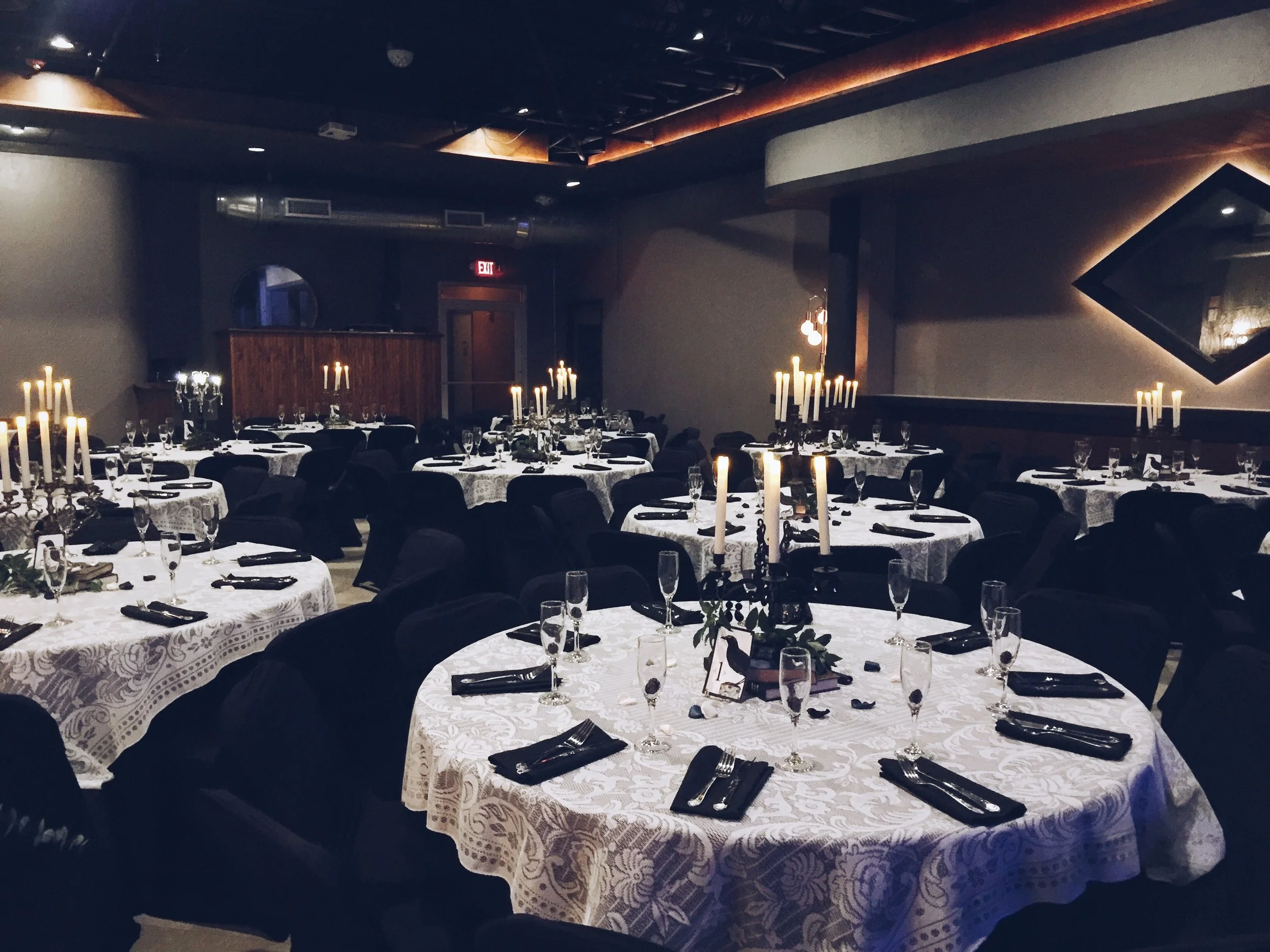
The venue sits at 20 N Main Street, near the University of Florida and Shands Hospital, and supports the practical needs of a full wedding with professional audio-visual assistance, in-house catering and a full-service bar. Art still needs more than an empty wall. Its size, placement, lighting, security and relationship to flowers, food and guest movement should be decided before the final floor plan is locked. Treated as part of the room rather than a last-minute addition, local work can give each part of the day its own character without making the celebration feel crowded or over-designed.
Find a visual direction that feels local
Begin with the journey of the day rather than a mood board alone. Map where the ceremony begins, where cocktails move, whether guests wait indoors, and where dinner and dancing will happen. The Wooly’s flexible floor plan can support distinct zones, but each artwork needs a clear role: a focal point, a quiet transition, an intimate conversation piece or a source of colour and pattern. That role prevents every available surface from competing for attention.
Local can be explored through several visual vocabularies. Gainesville artists might work with Florida light, architecture, waterways, native plants or social history, giving the décor a specific sense of place. Choose one dominant palette and one contrasting texture, such as pale timber against saturated painting or fine ceramics beside loose botanical forms. The simplest arrangements often read more confidently than a different artistic language in every corner.
Decide who will act as the art liaison before contracts are signed. This person can manage measurements, artist questions, approvals, delivery, installation and removal while you retain final creative authority. It helps to share a short written brief containing guest numbers, the full event timeline, venue dimensions and photographs of the space. Technical ideas should also be tested early: ask The Wooly about its production requirements and whether it recommends an event production partner for moving-image playback, rigging and show control.
Source and commission Gainesville artists
Source work through Gainesville galleries, independent studios, artist collectives, open calls and the University of Florida’s surrounding creative community, then check whether the artist has exhibited or sold at The Wooly. Availability and lead times vary, so begin with shortlists rather than assuming a particular artist can accept a commission. A nearby maker is useful for fittings, but artistic relevance matters more than convenience; a regional Florida artist may create a stronger connection than a generic print bought close to the event.
When you compare original work, limited-edition prints and commissioned pieces, check what the price includes. Clarify whether framing, delivery, installation, sales tax, rights of use and future reproduction are separate. A commission can involve a modest existing sketch developed to a final size, a new painting made from photographs of the venue, or functional ceramic tableware. These choices let the artwork participate in the wedding while preserving a clear division between the artwork’s ownership and the event’s temporary use.
Moving image offers another route. A local filmmaker can create a short portrait of the couple, a portrait of Gainesville or a sequence of images from an artist’s practice, provided permissions and music rights are settled. The Wooly has experience hosting a private film screening, which can inspire a lobby film or an intimate transition between ceremony and dinner. Keep the edit quiet and short enough that it enriches the room; repeated loops can quickly turn a meaningful contribution into background noise.
Shape the room around each artwork
Treat every artwork as part of a sightline system. Ceremony pieces must remain visible from the aisle and important guest seats, while dinner displays need to reward close viewing without blocking plates, speakers or service. For a larger work, leave air around it rather than filling the gap with props. In a reception room, position smaller works on sturdy furniture or plinths and secure them against vibration, accidental knocks and curious hands.
Lighting should reveal texture without making colour look theatrical. Warm, high-colour-rendering fixtures around 2700–3200K suit most receptions, and carefully aimed spots create depth without flattening a painting. The venue’s guide to gallery lighting angles is a useful starting point for checking glare and shadow. Bring the artist or installer into the conversation early, since valuable paper, textiles and photographs can react differently to heat, ultraviolet exposure and prolonged illumination.
For moving-image work or synchronised lighting, confirm cable paths, screen dimensions, sound zones and power loads before placing any equipment near guests or art. A ten-minute test with representative content is more useful than assuming that a file will look right on the venue’s system. Projection equipment also needs sufficient darkness, which may affect ceremony timing, decorative lighting and the placement of reflective surfaces.
Keep drinks, food preparation, florists and coat storage away from displayed work wherever the floor plan allows. Florida humidity can affect paper and some materials, so ask about climate control, packing procedures and safe overnight storage. If the work must remain installed overnight, agree on who checks the room and who records condition. A small condition report before and after the event protects both artist and host.
Let the decor support the artwork
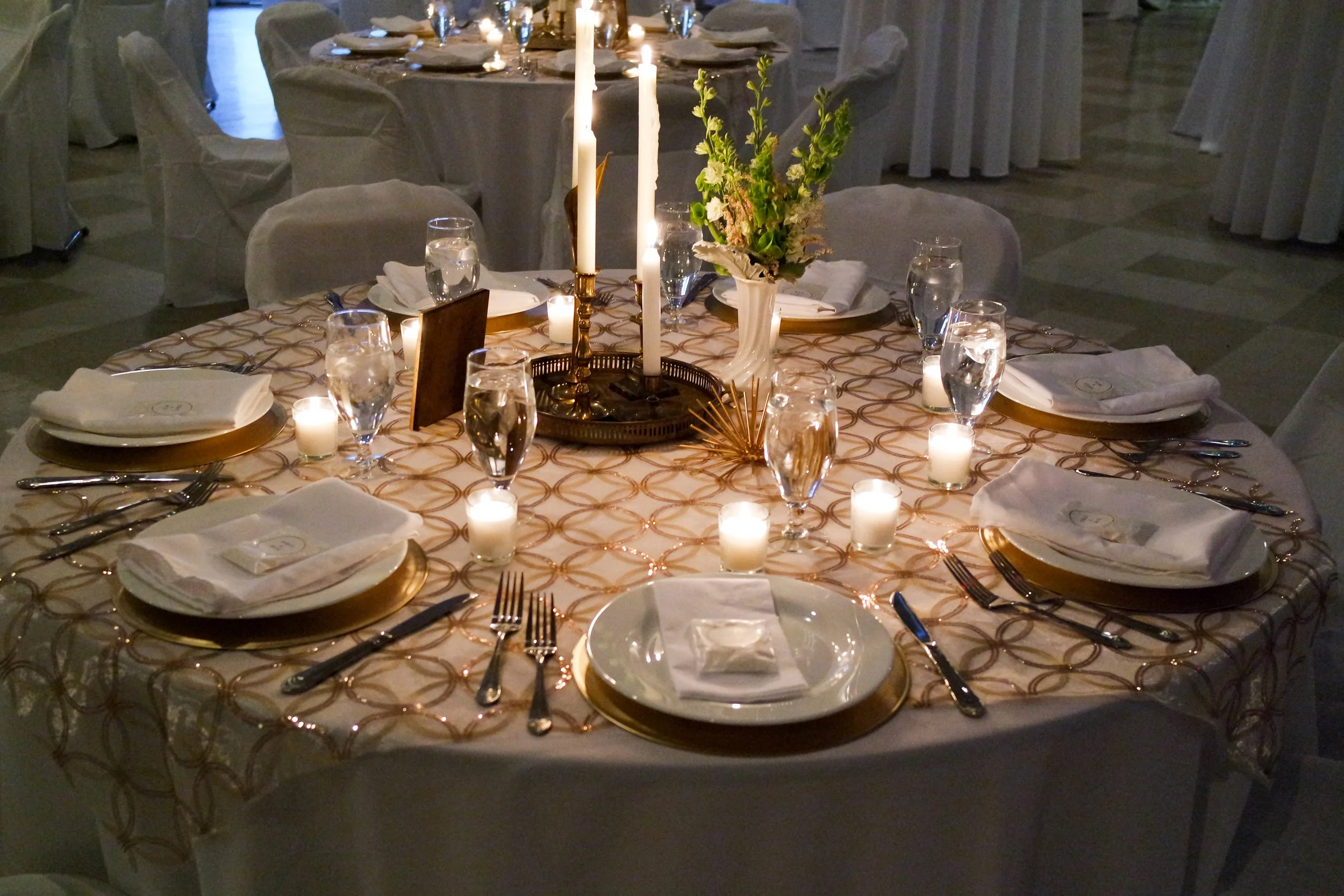
Art should guide the supporting décor rather than disappear beneath it. Published guidance on displaying local artwork reinforces the value of spacing, consistent presentation and deliberate lighting. Use one palette drawn from the work across linens, stationery and botanical accents, then vary texture elsewhere. This creates continuity between ceremony, cocktail hour and dinner while allowing each zone to retain its own function.
Florals can frame a piece instead of hiding it. Ask a local grower or florist for seasonal stems with movement, then keep arrangements low beside paintings and avoid dense placements that force guests to peer through leaves. A sculptural branch or single expressive stem can echo an artist’s line without copying the artwork. For tables, original ceramics, illustrated menus or small printed cards extend the concept beyond the wall.
Make the commissioned work useful at several moments. An artist can create a welcome sign, a cake screen, place cards or a portrait rendered in a chosen palette, while a larger finished piece becomes the visual record of the day. Live painting is another option, provided the artist has a safe, well-lit position and the finished work can be protected, displayed or collected according to an agreement made in advance.
Bring Australian instincts without copying a theme
Australian design sensibilities can enrich the brief without turning a Florida wedding into an imported theme. Sydney’s flower trade and Melbourne’s strong studio culture offer useful examples of independent makers and locally grown materials, while Brisbane’s warm, humid climate demonstrates why fresh stems need thoughtful conditioning and rapid installation. In Gainesville, an experienced local florist can translate that instinct into seasonally suitable species and reliable delivery windows.
The Australian wedding custom of moving from formal entrances and speeches to first dance and cake cutting can shape where art appears. Place a bold piece where it is seen during the processional and quieter studies in lounges used between events. Consider Australian artists and independent printers as additional sources, but document provenance, copyright, shipping and import responsibilities. If culturally specific motifs are meaningful to the couple, commission them through the artist rather than using mass-produced imitations as generic decoration.
The Australian market is accustomed to couples coordinating separate florists, stationers, makers and hire suppliers, a pattern that transfers well to a venue offering catering, audiovisual support and a bar in one location. Budget the artwork, freight, framing, installation and insurance as distinct lines, and price the US venue costs in US dollars rather than treating an Australian-dollar estimate as a fixed quote. Local Gainesville suppliers also reduce the risk of artwork arriving with insufficient time for condition checks.
A focused selection can be kept deliberately small:
- Choose one venue-scale local work as the visual anchor, then let supporting pieces echo its palette rather than compete with it.
- Commission pieces that solve a wedding need, such as menus, signs or ceramics, so the art is used rather than displayed in isolation.
- Use locally grown seasonal botanicals around the art, with the florist and artist agreeing on heights that preserve sightlines.
- Confirm scale, framing, power, rigging and storage with The Wooly before ordering anything for the walls.
- Allocate contingency for transit, installation, late adjustments and protection; production support can absorb surprises that would otherwise disrupt the schedule.
- Credit the artist and describe the work in the digital wedding album or printed keepsake so the local connection remains meaningful after the room is cleared.
Lock the handover and protect the final display
Lock the practical details with a shared timeline that begins with artist availability, not the caterer’s final guest count. Share confirmed measurements, load-in routes, operating hours, breakages and photography requirements, and obtain written venue approval for hanging or attachment. Contracts should state who owns the work after the event, whether it may appear in photographs, and whether unsold pieces remain with the artist.
On the day, appoint one person to receive and install the work, another to coordinate with venue production, and a third to oversee florals, catering and guest-facing details. Keep pathways clear, test all lights before doors open, and photograph the installed pieces for the artist. An early dinner-service check can reveal glare, leaning frames or shifting décor that looks fine in an empty room.
By the evening, local art can make The Wooly feel less like a hired backdrop and more like a place with its own cultural life. The practical takeaway is to choose one strong local work, place it where guests can live with it, and coordinate the rest of the decor around its colour, scale and story.
Follow the Calendar
News, ticket links, and last-minute additions posted across our channels.
Explore the Venue
Five pages covering the full run of programming and private bookings.
Browse the schedule for movie showings, live music, and art shows.
Weddings, holiday banquets, cocktail parties, and anniversaries.
Meetings, networking, luncheons, and fundraisers with AV support.
Concerts, film screenings, art showcases, and community pop-ups.
Photos from past concerts, private functions, and gatherings.