Live shows, movie nights, art openings, private parties, and corporate meetings at 20 N Main St — minutes from the University of Florida and Shands Hospital.
Stay in the Loop
Get the next show, screening, and event announcements sent to your inbox.
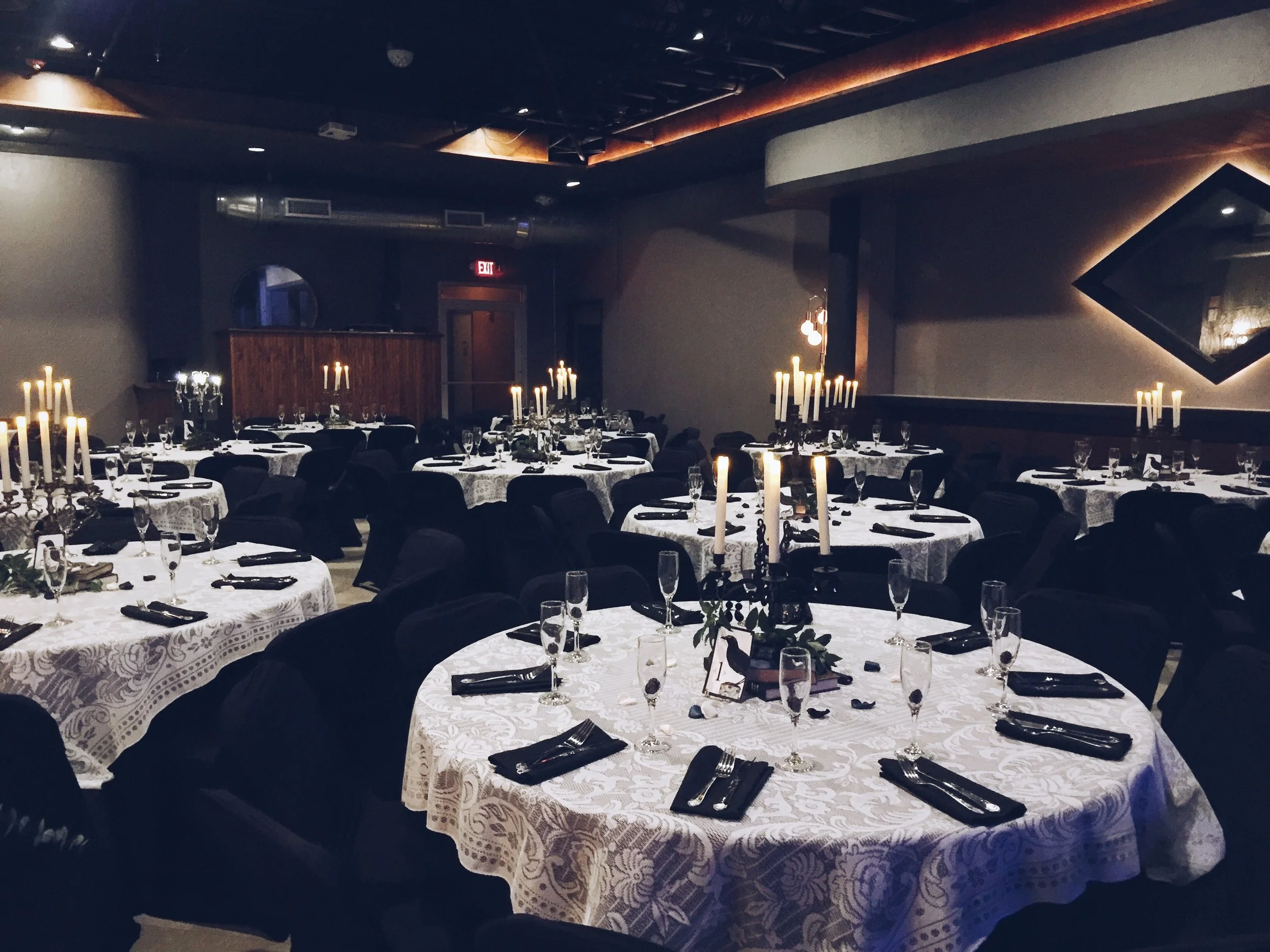
Inside the Room
A look at the stage, the floor, and the nights that move through them.
Practical gallery lighting angles at The Wooly
The best lighting angles for an art gallery inside The Wooly begin with what the light needs to reveal. Beam direction determines whether a flat canvas looks dimensional, whether a frame casts an distracting shadow, and whether glass reflects the room instead of the artwork. With The Wooly’s flexible floor plan and professional audio-visual support, gallery-style displays can share the venue with an opening, screening or live event without creating two unrelated lighting schemes.
The most useful starting point is a 30-degree aiming angle measured from the wall’s perpendicular: the beam meets the surface at about 30 degrees rather than striking it head-on. This reveals relief while keeping shadows controlled. It differs from a fixture’s 30-degree beam spread, which describes the width of the light cone. Keep those measurements separate, test them on a sample wall and judge the result with low ambient light.
Plan around the art and the room
Begin by matching lighting to the hang, not simply to the venue. Flat paintings, works on paper, textiles, photography, sculptures, neon, video and installations each respond differently. The Wooly’s gallery rental options and flexible layouts provide a useful starting point for confirming which surfaces can carry track, pin or clamp fixtures. Record each work’s medium, depth, frame finish, glazing and viewing height.
Map those objects onto the room before choosing a fixture. Mark where visitors will stand, where queues will form and which walls face windows or doors. In The Wooly’s downtown setting, late-afternoon exterior light and screen content can change contrast during an event. An art opening, film screening and wedding reception need different ambient levels, so decide whether the display should maintain a constant visual priority or respond to each part of the programme.
For Australian planners, the method transfers well, but the electrical checklist differs. Australian venues commonly use 230 V and Type I plugs, while a US venue’s North American supply and connector format do not match; adapters do not correct a voltage mismatch. Local conditions also matter: Brisbane laneway galleries can receive strong subtropical daylight, Melbourne warehouse conversions often have deep ceilings, and Sydney’s compact commercial precincts leave limited room for floor stands.
Use thirty-degree wall washing for the main display
For most framed paintings and mixed-media walls, a 30-degree wall wash is the strongest all-purpose position. Mount or aim the fixture above and to one side so the light reaches the artwork at roughly 30 degrees from its perpendicular. This creates a gentle shadow beneath heavier frames and raised collage without turning every texture into a ridge. It also gives the eye enough tonal modelling to separate a dark work from a dark wall.
Aiming every track head at the centre of each picture often creates visible pools. Use an asymmetrical wall washer or stagger the heads so their beams overlap evenly across the display. Position the lights at ceiling level or on a dropped track, then set their horizontal offset from the vertical drop to produce the target angle. On a high ceiling, increase throw rather than fixture power because extra watts cannot correct poor geometry.
Set the level at the artwork plane, not at the ceiling. Many gallery standards place highly sensitive works on paper near 50 lux, while conventional paintings and objects are often shown around 100–200 lux; conservation advice should determine the final target. Dimmable, high-colour-rendering LEDs make adjustment easier. Australian technicians also check R9 for reds and TLCI for repeatable camera colour, both useful for event lighting and artwork documentation.
Reserve steeper light for texture and form
Reserve steeper light for surfaces that need to be physically read. At 45–60 degrees from the wall normal, raking light exaggerates canvas weave, plaster, stone and relief. It suits textured works or architectural samples, although the shadows become deeper and can conceal information. Use it selectively rather than as the baseline for a mixed wall, and step back ten metres to judge whether the texture feels expressive or harsh.
Sculpture calls for a different form of angle control. A key light placed about 25–35 degrees off the viewer’s axis gives shape without immediately flattening it; a weaker fill from the opposite side can retain detail in the darkest plane. Keep both sources high enough to reduce shadows across the floor. Transparent or polished objects may need black flags or negative fill to maintain their outline against a busy background.
Compact LED profiles and magnetic track systems available through Melbourne, Sydney and Brisbane suppliers make these adjustments portable between short runs and longer installations. Their benefit extends beyond weight. Crews can re-aim a yoke, change its colour temperature or add barn doors without replacing the rig. On an art wall, restraint remains important: one crisp modelling light usually appears more deliberate than several competing accents.
Handle glass, frames and mixed media carefully
Glazed photography and framed works under glass need disciplined control. A near-perpendicular source can reduce the apparent depth of a frame and limit the reflected ceiling, but it can also erase subtle texture. Keep ambient levels low, position the source so its reflection falls outside the normal viewing area and inspect the piece from several angles. Two crossing beams may improve visibility on a shallow object, yet they often create separate shadows on the wall.
Neon, LEDs and kinetic pieces should be treated differently from objects that only receive light. Dim the room in stages and watch for colour spill on nearby faces and walls. If the work includes video, confirm that the display is flicker-free and can be captured cleanly by phones and cameras. The graphic, saturated visual language associated with Australian pop-culture events such as Camden Comic Con demonstrates why vivid content needs separation from competing ambient colour.
Mixed installations need a lighting hierarchy. Establish a base level for safe circulation, then add focused light where form, colour or interaction requires it. Keep fixtures out of projected sightlines and leave artwork surfaces free of cable crossings. At The Wooly, a gallery wall can coexist with a band or screen, but the rig should switch to a low, neutral wash for announcements without leaving the exhibition in an awkward half-lit state.
Build layers for parties and screenings
Plan the room as three coordinated layers: ambient light for safe movement, accent light for the art, and task light for screens, catering, instruments or presentation areas. For a private party or wedding, warm 2200–2700 K ambient light can make the space welcoming while the artwork remains brighter than its background. During an opening, raise the accents gradually; for dancing, pull them down and let decorative lighting carry the room.
For a corporate meeting or screening, the visual priority changes again. Presentation screens need even, low-reflectance light on nearby walls, while a film requires strong blackout. Live music benefits from controlled stage light and restrained spill onto artwork so faces and works do not compete. The Wooly’s audio-visual support is valuable here: lighting cues should be rehearsed with sound, projection and house transitions, not treated as a late addition to the run sheet.
Music played at a related Australian event may require APRA AMCOS or PPCA licensing, depending on the music and licence scope. Venue permission, capacity and state workplace-safety rules apply to the audience layout, and temporary power should be inspected by a competent person rather than improvised from domestic extension leads. These compliance details affect switch positions, cable routes and how long the rig can remain assembled before an event.
Compare the useful aiming positions
Use the angle that matches the visual evidence the work needs, then verify it under the conditions guests will see. Include beam spread, mounting distance, wall colour and viewing position; a good-looking 30-degree setup can fail if the lens is too narrow or the wall is highly reflective. Mark each aim so it can be reproduced after a rehearsal.
| Aiming position | Best suited to | Main benefit | Main caution |
|---|---|---|---|
| Near-perpendicular, 0–10 degrees from wall normal | Flat paintings, graphic works and selected glazed pieces | Minimal cast shadows and controlled reflections | Can flatten texture or create direct glare |
| Standard wall wash, about 30 degrees | Most framed works and mixed-media walls | Balanced modelling and shadow | Requires even overlap and careful aiming |
| Raking light, 45–60 degrees | Canvas texture, relief, masonry and installation details | Reveals surface depth | Creates deep shadows and uneven brightness |
| Cross-lighting from opposing sources | Shallow relief and selected sculptural pieces | Reduces one dominant shadow | Can split shadows and appear visually flat |
| Floor uplight or grazing | Feature walls and architectural fragments | Adds atmosphere and texture | Can cause glare; unsuitable for sensitive surfaces without review |
The practical shortlist is straightforward: begin at 30 degrees for the main wall, move toward near-perpendicular for especially flat or reflective work, and introduce raking only where texture benefits. Before approving the design, check The Wooly’s venue rental rates against fixture quantities, dimming channels, rigging, technician hours and event-day resets. Australian organisers should confirm whether quoted figures are in US dollars and which taxes, crew and delivery charges are included.
Keep a written hierarchy for switching between gallery and event modes. One control can bring the art to exhibition level; another can cut ambient light for a film; a third can leave pathway and bar lighting during a reception. This hierarchy protects both the artwork and the pace of the event as The Wooly moves from exhibition time into live music or private dining.
Complete a final technical walkthrough
Complete the final walkthrough with the gallery dark, the doors closed and the room at operating temperature. View every work from the expected standing distance, then from seated and wheelchair positions. Check for glare, clipped highlights, uneven wall washing and shadows crossing faces. Have someone else stand at the planned sightline because the installer’s view from a ladder can hide problems that dominate the visitor experience.
Test the programme at the time guests will arrive, including exterior light, screen content, bar lighting and sound cues. Record fixture IDs and positions rather than relying on memory, and label switches in plain language. If the display moves between The Wooly’s flexible layouts, mark floor positions and safe cable routes so a quick room change does not alter the artwork’s viewing angle.
Before the first public event, confirm the artwork count, lamp positions and dimming scenes with the venue’s technical lead at 20 N Main Street, near the University of Florida and Shands Hospital. Create a one-page lighting cue sheet listing every artwork, fixture number, target angle, colour temperature and dimming level, then walk through it with the technician before doors open.
Follow the Calendar
News, ticket links, and last-minute additions posted across our channels.
Explore the Venue
Five pages covering the full run of programming and private bookings.
Browse the schedule for movie showings, live music, and art shows.
Weddings, holiday banquets, cocktail parties, and anniversaries.
Meetings, networking, luncheons, and fundraisers with AV support.
Concerts, film screenings, art showcases, and community pop-ups.
Photos from past concerts, private functions, and gatherings.