
Live shows, movie nights, art openings, private parties, and corporate meetings at 20 N Main St — minutes from the University of Florida and Shands Hospital.
Stay in the Loop
Get the next show, screening, and event announcements sent to your inbox.
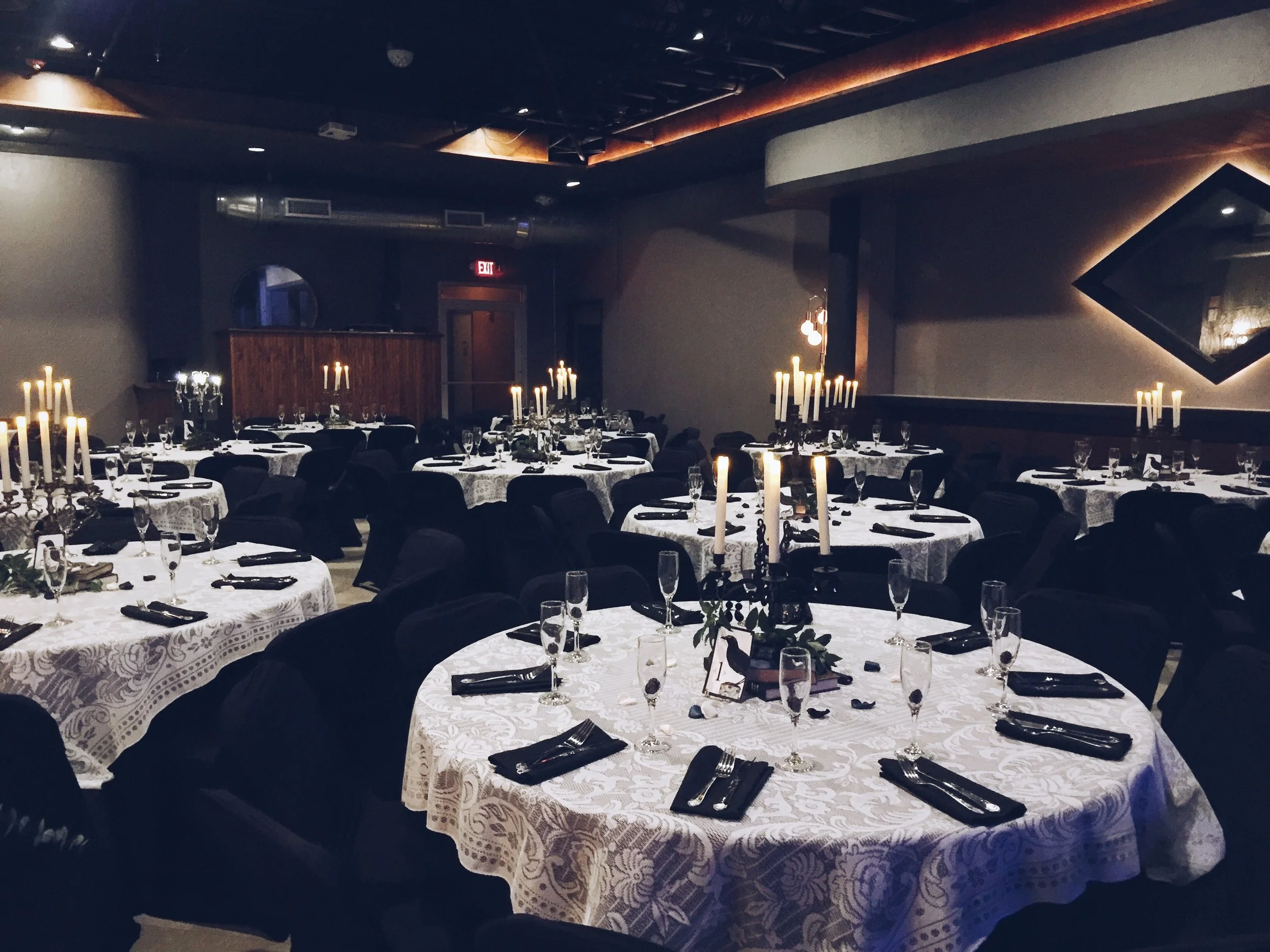
Inside the Room
A look at the stage, the floor, and the nights that move through them.

Noise ordinances for late-night events at The Wooly
The Wooly at 20 N Main Street combines a flexible floor plan, professional audio-visual support and a full-service bar across concerts, private parties, weddings, film events and corporate gatherings. That combination also places amplified sound within a mixed urban environment. Downtown blocks can contain apartments, offices, restaurants, hospitality venues and people who expect a reasonably quiet night after nearby entertainment ends. A successful late programme therefore depends on managing sound at the room boundary, not merely keeping the stage volume acceptable to guests inside The Wooly.
A noise ordinance is not a blanket ban on loud events. It sets standards for unreasonable or excessive sound, may regulate particular activities and hours, and often works alongside permits for special events, amplified sound, temporary structures and street use. The rules are separate from occupancy, fire safety and liquor licensing. Florida also generally prohibits licensed alcohol sales between 2 a.m. and 7 a.m., subject to lawful exceptions and stricter licence conditions, so an event’s finish time must satisfy several systems at once.
For organisers booking The Wooly, the practical approach is to treat the city ordinance, event permissions and venue agreement as one operating plan. Start before the contract is signed, document what is known to be permitted, and assign someone authority to reduce sound during the event. Current rules and permit conditions should be checked for the event date because the city’s enforcement guidance and the venue’s operating arrangements can change.
Start with the correct local jurisdiction
The Wooly is inside the City of Gainesville, so the city’s current noise-control provisions are the primary local reference. University of Florida policies do not ordinarily govern a private downtown venue, and Alachua County rules are not a substitute for city requirements where the site lies within Gainesville municipal boundaries. That distinction matters because complaint handling, permitted hours and escalation contacts can differ between the city, the county and the university.
Check four layers rather than searching for one universal decibel number: the city code; any special-event or amplified-sound conditions; The Wooly’s liquor licence, house rules and rental agreement; and separate alcohol, fire and occupancy requirements. An approval for the event may prescribe a sound schedule, yet excessive sound can still be investigated. Where requirements overlap, the strictest applicable operating condition should be built into the floor plan and timeline.
Events that shift from a daytime meeting to an evening concert create a second compliance phase after the formal programme ends. The conference and concert format shows why a technically compliant conference session can still be followed by amplified music, extended bar service and a different crowd-egress pattern. The sound, security and closing plan should therefore cover the transition as deliberately as the opening doors.
Measure sound where the law measures it
Decibels are useful only when the event and the regulator use the same method. Municipal measurements may be taken with a calibrated meter, often expressed as dBA or an LAeq value, at a prescribed receiving point such as a property line. Duration, frequency, octave weighting and background noise can all affect the assessment. A phone app or the reading on a mixer cannot establish compliance, and a limiter is an operational control rather than legal approval.
Indoor events are not automatically exempt. Bass can travel through masonry, doors may remain open for queues, and exterior stages, portable speakers, air-conditioning, catering extraction, generators, loading and departing patrons all create sound outside the main room. At The Wooly, late-night weddings and corporate parties can change their footprint even when the advertised activity is indoors. Door management, queue placement and equipment screening therefore belong in the noise plan.
University bookings make early coordination especially useful because student organisers often work with volunteer crews, student bands and compressed load-in schedules. The experience of university student groups can help keep soundchecks and performance times realistic while leaving enough time for a controlled finish. A short technical rehearsal with the venue should confirm which speakers and subwoofers may be used, where they can face, and who can change settings without waiting for the promoter.
Build permits and neighbour management into the run sheet
Permits should precede promotion of an event that requires approval. Depending on the booking, the city may require a special-event application, a sound-related approval, temporary structure or street-use permission. Organisers should provide a site plan, operating hours, equipment list, outdoor footprint and responsible contact. Obtain written confirmation of permitted sound hours rather than assuming that a standard indoor performance is exempt or that a festival-style schedule can be transferred to The Wooly.
Neighbour communication works best as part of the run sheet, not as a single email days before the event. Identify residences, hotels, businesses and shared building areas most likely to receive sound, and give them a named contact and escalation number. During the event, the venue manager or security lead should log complaints, observe the affected location and reduce levels immediately when a complaint is credible. If enforcement is expected, a trained operator using calibrated equipment can make the response objective.
Public multi-stage programming shows how quickly sound management can extend beyond the advertised performance. The festival setting of Freedom Old Home Week involves changing line-ups, temporary power, audience movement and nearby community activity, even though those conditions differ from an indoor downtown venue. The useful lesson for a late event at The Wooly is to plan changeovers, sound checks, generator use and crowd dispersal as noise-producing transitions, each with a time limit and a person in charge.
What Australian organisers can learn from local practice
Australia has no single national event-noise regime. State and territory environment agencies, liquor authorities and local councils share responsibility, so a rule from Sydney cannot be imported into Melbourne, Brisbane or another city. Australian venue teams are accustomed to late-night trade, crowd management and formal acoustic controls, making them useful comparators for a Gainesville booking. The comparison should concern process, not unverified numerical limits.
In Melbourne, licensed venues commonly operate late under Victorian liquor licences, often until 5 a.m. subject to the individual licence, while EPA Victoria and councils control unacceptable noise and event conditions. Melbourne’s dense nightlife market therefore relies heavily on door staff, security, acoustic limits and early complaint escalation. For a similar booking at The Wooly, the transferable practice is to put those controls in the event plan rather than treating the closing hour as the only concern.
Sydney’s late-night districts also operate under venue-specific liquor conditions administered through Liquor and Licensing NSW, alongside NSW EPA and council noise powers. Brisbane adds a distinct public-event market: events around Queen Street Mall can require council approval, acoustic management and transport coordination, with Queensland liquor and building rules applying in parallel. These markets are recognisably different from Gainesville, yet all three cities treat neighbourhood impact, licensed closing and public safety as connected design issues.
The everyday Australian habit of calling for last orders also reveals a useful distinction: licensing hours are not sound permission to continue being noisy. Acoustic consultants commonly work to LAeq-style averages and council-defined assessment periods, while event teams control peak levels and the dispersal of patrons. For The Wooly, the Australian planning lesson is to specify a measurable sound target, a monitoring method, an observable complaint process and a time at which every non-essential sound source stops.
A practical compliance checklist
A sound plan becomes easier to audit when each responsibility has an owner and a time attached to it. The following checklist suits a late-night concert, wedding, corporate function or mixed programme at The Wooly, subject to the city’s current requirements and the venue’s licence.
- Confirm in writing which city permits, noise provisions, curfews and licence conditions apply to the exact date, room layout and operating hours.
- Use the venue-approved sound system, train the sound lead on the limiter and prohibit unapproved subwoofers, generators or exterior speakers.
- Set a clear amplified-sound wind-down time that precedes patron departure and aligns with bar service, security coverage and transport needs.
- Notify affected neighbours and building managers early, providing the event contact, expected finish time and process for reporting a concern.
- Assign one person authority to stop or reduce sound, keep a meter available and log complaint times, observations and every corrective action.
- Prepare a graduated response for a complaint: acknowledge it, assess the affected location, reduce the source, record the outcome and contact code enforcement if needed.
- Plan doors, queues, load-out, rideshare pickups and waste collection so that the event’s final hour does not become its loudest and least controlled period.
Keep the completed checklist with the event contract, permit decision, floor plan and contact sheet. If the promoter requests extra volume, an outdoor extension or a later finish, treat that as a change requiring venue approval and a fresh noise review rather than an on-the-night favour. Written change control protects the venue, promoter, neighbours and the people managing the door.
Turn the rules into a defensible event plan
The daily rhythm described in an event coordinator workflow reflects why late-event compliance cannot be left to the final soundcheck. Permits, vendor arrival, guest communication, technical rehearsals and emergency contacts all affect how much time remains for a controlled finish. A coordinator who knows those dependencies can schedule the loudest work early enough to create margin for a complaint, equipment problem or last-minute bar extension.
At contract stage, make the sound schedule and escalation process explicit in the venue agreement. The document should identify who supplies equipment, who operates it, which hours are approved, when doors and music close, and who may authorise a change. It should also distinguish an amplified-sound approval from a liquor licence, an occupancy limit and permission to use the street or public space. Those documents answer different questions, and satisfying one does not answer the rest.
On the event day, brief staff to use one agreed vocabulary: music down, doors open, programme ended, sound off and patron dispersal. Keep a timestamped log, make reductions promptly and preserve records of meter readings and complaints. Where the event combines a meeting with live entertainment, the conference, concert and bar timelines should share one run sheet so that a late meeting does not quietly push the programme into a restricted period. A defensible finish time must satisfy the approved sound schedule, the liquor-licence conditions and the limit imposed by the city’s current measurement method at the same time.
Follow the Calendar
News, ticket links, and last-minute additions posted across our channels.
Explore the Venue
Five pages covering the full run of programming and private bookings.
Browse the schedule for movie showings, live music, and art shows.
Weddings, holiday banquets, cocktail parties, and anniversaries.
Meetings, networking, luncheons, and fundraisers with AV support.
Concerts, film screenings, art showcases, and community pop-ups.
Photos from past concerts, private functions, and gatherings.