Live shows, movie nights, art openings, private parties, and corporate meetings at 20 N Main St — minutes from the University of Florida and Shands Hospital.
Stay in the Loop
Get the next show, screening, and event announcements sent to your inbox.
Inside the Room
A look at the stage, the floor, and the nights that move through them.
Candles and Open Flames at The Wooly: A Planning Guide
The Wooly is a versatile event venue at 20 N Main Street in downtown Gainesville, Florida, near the University of Florida and Shands Hospital. Its spaces accommodate live music, film screenings, art openings, weddings, corporate meetings and private parties, often with catering, a full-service bar and professional audio-visual support. Décor that seems simple, such as candlelight on a dining table, can therefore affect fire safety, insurance conditions and the smooth operation of a crowded event.
For planners in Australia, an important distinction is that The Wooly operates under Florida rules rather than Australian legislation. Anyone holding an event in Gainesville must follow the venue’s policy and applicable local fire-safety requirements. For an equivalent event in Australia, the relevant rules would instead come from the venue, the state or territory government, local councils and the event’s insurer. In both places, venue rules may be stricter than the general legal minimum.
The venue’s baseline safety position
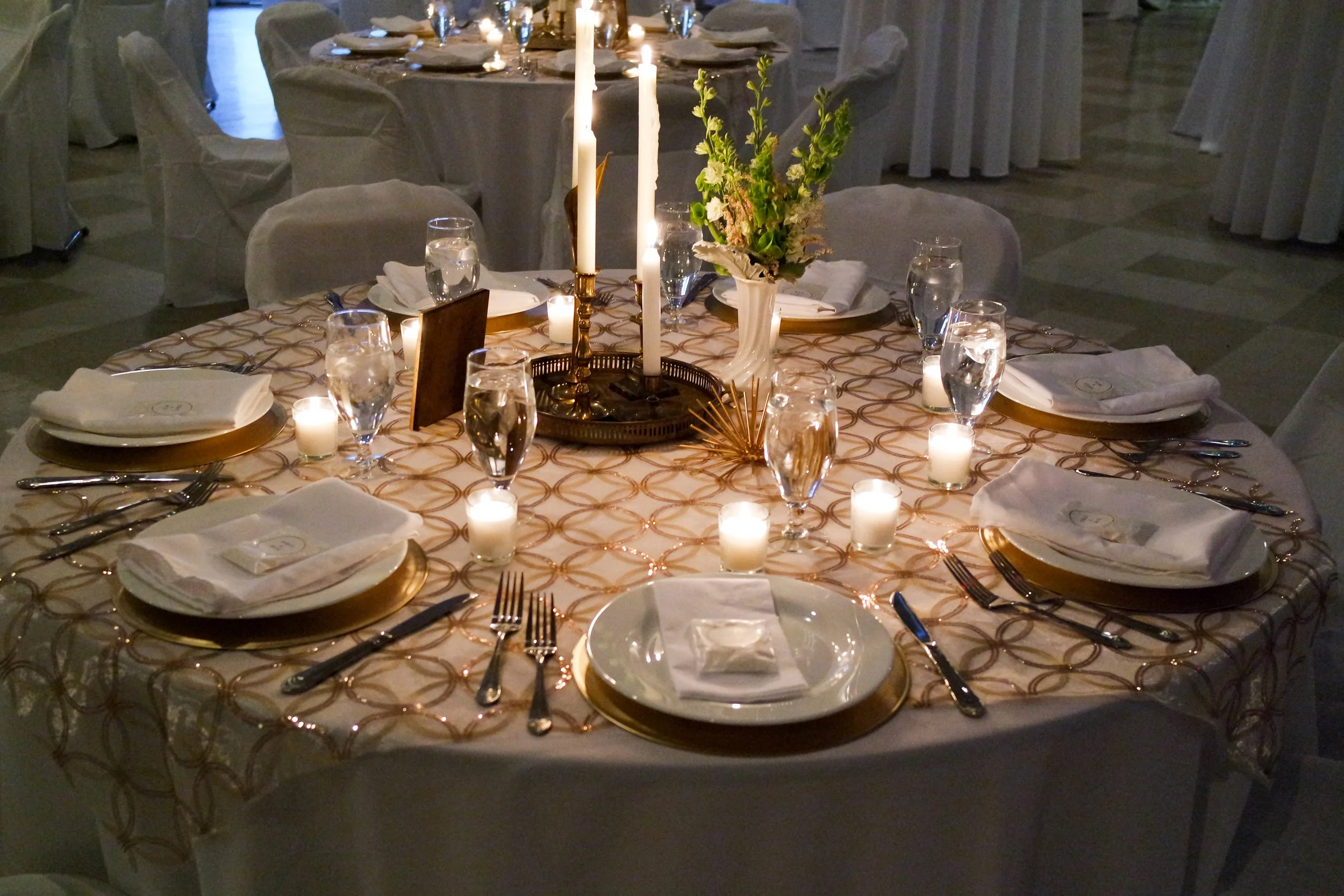
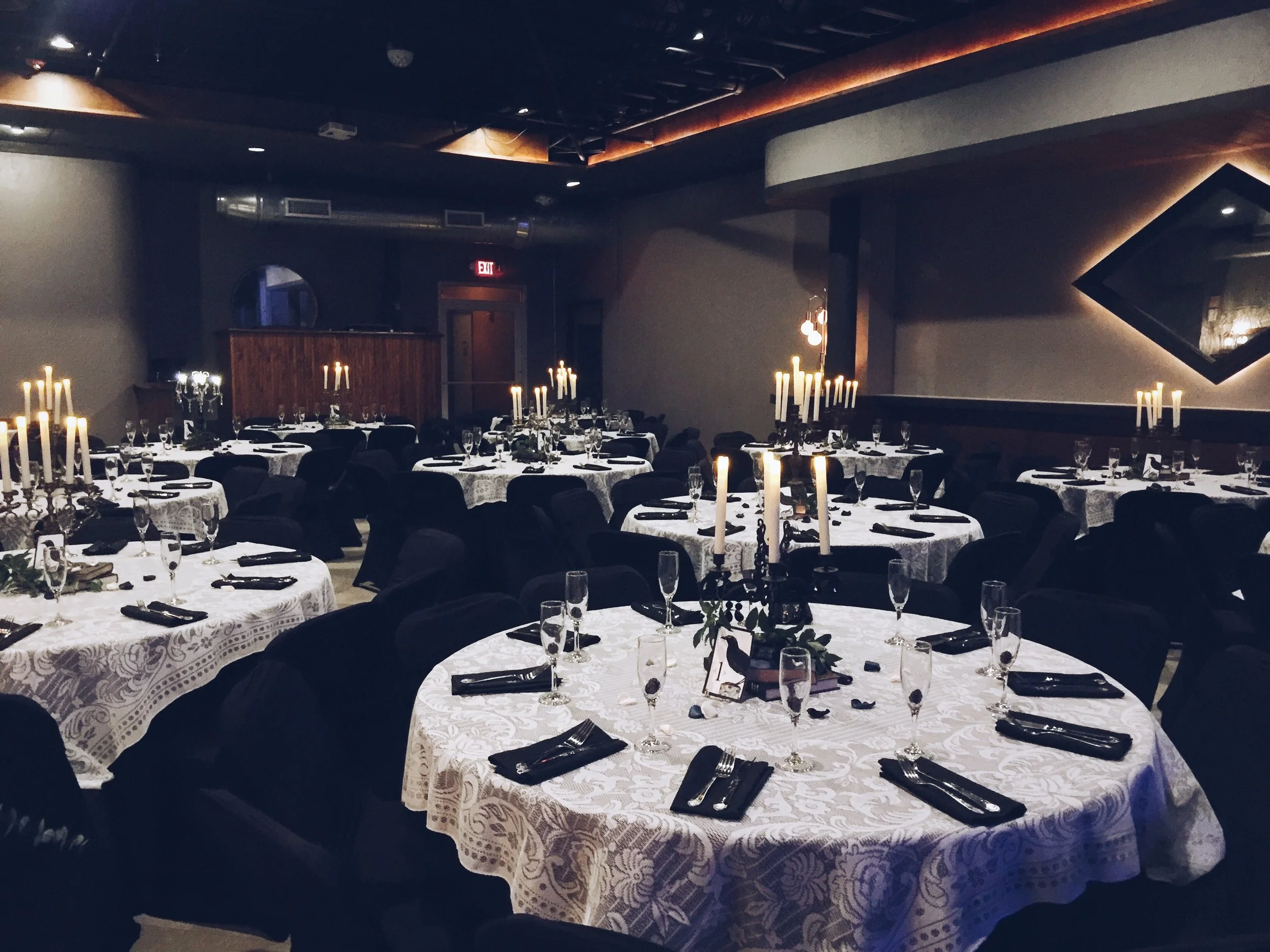
The Wooly does not approve ordinary open-flame candles or other exposed flames as standard guest décor. The accepted alternative is a battery-operated or LED candle that creates the appearance of fire without producing a flame. This distinction applies to table decorations, stage scenery, processional arrangements and most other decorative uses. Any unusual proposal falls outside the standard booking and would need to be confirmed directly by venue management in writing before suppliers act.
This approach reflects the practical risks of a busy entertainment venue. A flame near upholstery, audio equipment, stage drapery or crowded circulation areas can create problems that are much greater than the small glow might suggest. The venue also needs to consider emergency exits, alarm systems and the behaviour of guests in an alcohol-service environment. The policy is not a claim that every lit candle would breach Florida law; it is a house rule designed to keep events predictable and safe.
Current event information is published through official event information, while the final booking agreement may contain additional restrictions. Planners should treat the venue’s current policy and written event instructions as controlling, particularly if décor is being commissioned several months in advance.
What counts as an exposed flame
Lit tapers, tea lights, pillars, floating candles and candles inside decorative holders all fall within the flame category. So do incense burners, oil lamps, portable gas burners and improvised fire features. The size of the flame does not turn it into a different category: a birthday candle is still an exposed flame, even if it burns for less than a minute. Guests should not assume that an item is permitted merely because it is small, inexpensive or sold as party décor.
Electric candles and warm-white LED bulbs do not create an open flame. They are therefore much more suitable for The Wooly, although their placement still needs to respect exit routes and other venue requirements. Electric wax warmers create heat rather than light, so they should be raised separately with management. Their warm surfaces and electrical leads may create issues even though the product has no visible flame.
Patio events do not provide an automatic exemption. Wind can carry a flame towards seating, façades or landscaping, while nearby construction and combustible materials can complicate the risk assessment. Fixed appliances or equipment already installed and controlled by venue staff are different from guest decorations brought in for the event. A caterer, stylist or entertainer cannot introduce a burner, torch or candle on the assumption that it is simply part of their setup.
Creating atmosphere without a fire source
Flameless candles now offer enough variety for most event palettes. Warm-white battery tea lights can soften a long dining table, while LED tapers work for wedding aisles and stage backdrops. Rechargeable pillar lights, small votive-style units and battery-powered lanterns can create a layered display without cables running across walkways. A slow fade or a subtle colour change can imitate the movement of real candlelight more convincingly than a static bulb.
Professional programmes may need a restrained visual treatment that complements the presentation rather than distracting from it. The specialist event represented by ISABC 2023 is an example of the kind of formal gathering where lighting, staging and comfort matter alongside the content itself. Projected candlelight patterns, warm stage washes and low-level LED markers can provide atmosphere without introducing a physical flame into the audience area.
Quality still matters within the permitted options. Cheap LEDs may flicker, change colour unexpectedly or fail early, while poorly sealed battery cases can mark tables and clothing. Event organisers should test lighting in advance, bring spare batteries where permitted and confirm whether adhesive decorations may be attached to venue surfaces. Keeping candles away from speakers, cables, curtains and emergency signs also makes the setup more professional.
Performances, celebrations and filming
Live music and staged performances require particular care because performers may move quickly through the available space. A flame near a stage can interact with lighting rigs, costumes and scenery in ways that do not appear in a static room layout. The same concern applies to film screenings, where guests may be focused on the screen and less aware of decorations near the seating area.
Anyone presenting a recital can use The Wooly’s dance recital guide to work through event format and production requirements before finalising the décor. A recital finale may call for a strong visual effect, but LED candles can be positioned safely and coordinated with the performance schedule. Equipment should also remain outside dance routes, emergency walkways and the areas needed for safe access to sound and lighting controls.
Weddings and private parties present another common concern. Unity candles, aisle lanterns and cake decorations are sometimes designed around real flames. At The Wooly, the corresponding effect should use flameless products. Sparklers and other pyrotechnic effects are a separate category again and should not be added to an event plan without specific authorisation. If a cake arrives with candles attached, the event coordinator should know before delivery so the final arrangement can follow venue policy.
Australian parallels and community gatherings
Australian celebrations often feature birthday candles on a cake, whether the party is at home, in a pub function room or at a community hall. The custom is familiar enough that guests may assume a small exception is automatic. It is not. Venue staff in Sydney, Melbourne, Brisbane and other cities are usually expected to apply the published house rules consistently, particularly where the gathering includes children and candles could be moved without supervision.
Apartment living has made flame-free products especially useful in Australia. Strata schemes in Sydney and Melbourne commonly restrict candles, charcoal burners and other fire sources on balconies and in shared areas, even where a resident owns the property. Australian party and homeware retailers consequently stock a wide selection of battery tea lights, rechargeable tapers and flameless lanterns. These are practical choices for busy households, not merely substitutes available because a formal venue has banned fire.
The same distinction appears at community events, heritage gatherings and neighbourhood celebrations. Public-facing programmes such as Freedom Old Home Week demonstrate how flexible spaces bring together performances, food, family activities and local participation. Such events may include ceremonial candles or historically inspired lighting, but any event held at The Wooly would still need to use the venue’s flame-free approach rather than importing an outdoor or heritage practice without checking the rules.
Florida rules and Australian fire safety
Florida’s regulatory framework and Australian fire law operate separately. In Gainesville, the venue’s obligations are connected to its occupancy permit, building systems and the authorities responsible for local fire safety. In Australia, obligations vary between states and territories. Many premises in New South Wales must hold a current fire safety certificate through Fire and Rescue NSW, while councils may impose additional conditions on events in public spaces. Outdoor flames can also be restricted by bushfire-season rules in parts of New South Wales and Queensland.
The comparison below separates the venue’s working rule from the kind of checks commonly made for a comparable Australian event. It is not a substitute for state legislation or a local council’s directions.
| Decoration or feature | The Wooly working rule | Comparable Australian check |
|---|---|---|
| Lit wax candle | Not approved as standard décor; exposed flames require specific written venue confirmation | Confirm the venue’s rule, particularly for birthday cakes or ceremonies |
| LED or battery candle | Appropriate flame-free option, subject to placement and equipment rules | Usually suitable, but check strata, council and venue conditions |
| Incense, oil lamp or open-flame effect | Not included in the standard event setup | May require approval, insurance consent or a local fire permit |
| Electric warmer or powered light | No flame, although heat, cabling and placement may require review | Check venue electrical rules and public-liability insurance |
| Outdoor flame feature | No guest-supplied flame without venue agreement and local compliance | Check council approval and total fire-ban or bushfire restrictions |
Public-liability insurance can be another decisive layer for Australian events. Some policies exclude candles, pyrotechnics or activities involving heat, while others require written approval from the insurer. Melbourne’s event operators may also need to consider building occupancy controls and heritage overlays, whereas Brisbane organisers may need council permission for a temporary outdoor installation. These examples show why “the law allows it” is not a sufficient test for either country.
Planning decisions before guests arrive
The clearest way to handle the issue is to identify every proposed flame during the planning stage. That includes cake candles, table centrepieces, stage effects, processional lights, vendor equipment and anything intended for the patio. The event coordinator should receive exact product descriptions and photographs rather than a general promise that the décor contains no open flame. A written response then forms part of the event instructions.
Closer to the event, organisers should brief suppliers and caterers on the restrictions rather than assuming they have read the booking agreement. It is useful to confirm where flameless decorations may be placed, which surfaces can receive adhesive materials and whether powered devices need approval. Guests should also be directed not to bring personal candles or lighters into the event space, as individual improvisation can create a risk even when the official décor is compliant.
The rule to remember is straightforward: The Wooly permits the atmosphere of candlelight through flameless products, while an exposed flame is not part of the standard event setup. That distinction protects the atmosphere as much as it protects the venue, its guests and the uninterrupted flow of the evening.
Follow the Calendar
News, ticket links, and last-minute additions posted across our channels.
Explore the Venue
Five pages covering the full run of programming and private bookings.
Browse the schedule for movie showings, live music, and art shows.
Weddings, holiday banquets, cocktail parties, and anniversaries.
Meetings, networking, luncheons, and fundraisers with AV support.
Concerts, film screenings, art showcases, and community pop-ups.
Photos from past concerts, private functions, and gatherings.