Live shows, movie nights, art openings, private parties, and corporate meetings at 20 N Main St — minutes from the University of Florida and Shands Hospital.
Stay in the Loop
Get the next show, screening, and event announcements sent to your inbox.
Inside the Room
A look at the stage, the floor, and the nights that move through them.

A podcast producer's guide to The Wooly's on-site audio equipment
The Wooly gives podcasters a working event-room setup rather than a purpose-built recording studio. Its downtown Gainesville location at 20 N Main Street, near the University of Florida and Shands Hospital, puts it among busy daytime activity and short walking-distance logistics. Live music, film screenings, openings, parties and meetings all use the same flexible floor plan, so each podcast inherits a room designed first for audience coverage.
Professional audio-visual support can be valuable, yet house reinforcement and podcast capture have different jobs. A PA system sends one controlled signal to speakers; an isolated recording chain preserves each voice, removes room bleed and leaves room for clean editing. Before booking, ask what the current console, stage box, microphones, recording outputs and monitoring options can actually do. A published inventory is useful, but the technician's plan for the session is the decisive document.
This guide is written with Australian producers in mind. They arrive with different assumptions from an American venue about microphones, wireless bands, electrical supply and the shape of the podcast market. Sydney, Melbourne, Brisbane, Adelaide and Perth each have established crews and equipment suppliers, while Australian English can carry different vowel shapes and rhythms from one speaker to another. The aim is not to make the room sound like a radio booth; it is to make every source intelligible while preserving a natural Australian delivery.
House sound and live reinforcement
A venue PA is optimised to cover listeners evenly, not to expose a clean mic line. At The Wooly, the live-music and presentation workload points to a capable professional system, but that does not automatically mean every talkback, stereo feed or console output is available to a podcaster. The venue technician should map the stage box to the desk, identify phantom power and explain whether a spare output can feed a field recorder without splitting the audience mix.
A useful benchmark for the pace of Florida event production is the Southeast US Boat Show, which shows how presenter audio, music and audience announcements can share one show flow. A podcast crew should use that same discipline: every microphone gets a numbered channel, every playback source gets a known level, and the recording feed stays separate from the louder PA path. This protects an edit from sudden room changes, drink-table clatter or a musician warming up nearby.
Microphones for Australian conversation
A dynamic microphone is a sensible default for a live room because it handles loud voices, room reflections and accidental handling better than a sensitive studio condenser. A condenser can add detail when the interview is quiet, the performers stay still and the operator has placed the pair away from the bar and HVAC. RØDE, an Australian manufacturer familiar in Sydney music shops, offers both types; local familiarity is helpful, but the final choice should come from a spoken-word test with the actual hosts.
Australian English is varied rather than singular, and podcasts often move among speakers from different cities, migration backgrounds and multilingual families. A bright consonant can expose sibilance, while a conversational speaker may drift off axis. Test each person at speaking volume, then move the mic about 15 to 25 centimetres away and slightly off axis. A pop filter and stable boom or desk stand can make the difference without adding conspicuous processing.
Headphones, a handheld mic and a lavalier each solve a different problem. Use separate directional microphones for a two-host interview when room bleed matters; use a lavalier when hands, notes or instruments are involved. Wireless units add freedom but need coordination, so Australian teams should not assume channel plans or legal frequencies travel unchanged to Florida. Check the venue's approved bands and run a frequency scan before the doors open.
Mixing, recording and playback
A dependable podcast signal runs from the balanced microphone output to a preamp or mixer, then to a digital recorder or computer interface. Ask for 24-bit, 48 kHz capture where possible, set peaks with healthy headroom and keep the talkback channel out of the recorded mix. A small multitrack recorder can be cleaner than capturing a stereo feed from the room, because each speaker can be levelled and edited independently.
Playback and video need their own place in that plan. The venue's business presentation guide explains the projector workflow used for presentations; for a filmed podcast, the same discipline keeps captions, slides and microphone cues together without letting presentation audio leak into the talk track. Send videos early, confirm aspect ratio and play them through the house system rather than balancing a laptop speaker against the PA.
Monitoring should happen through closed-back headphones, and talkback should reach the presenter without entering the recording inputs. A headphone split lets the producer and host hear separate mixes, while a safety track on the recorder or card provides a fallback if the interface disconnects. If the interview is also being streamed, request a dedicated programme feed and retain local backup files as well as the venue's recording, subject to the agreement.
A practical podcast production checklist
A short technical brief protects the session more than any single piece of gear.
- Send the run sheet early and confirm the room, operating hours, technician, microphone count, console model, available inputs, outputs, monitoring and permission to record.
- Bring labelled XLR cables, adaptors, pop filters, spare headphones, charged batteries, storage and a backup recorder; confirm which consumables the venue supplies.
- Perform a spoken gain check with every presenter in position, then mark each channel on the patch diagram rather than relying on memory.
- Capture at least 30 seconds of room tone and a short clap or spoken sync marker for easier editing.
- Save an immediate backup after each recording block and keep one copy on a separate device before changing the setup.
Use the pre-session call to settle whether the house engineer records the podcast, supports a local recorder, or handles both. In Australian production slang, an afternoon setup may be called an “arvo” soundcheck, but it still needs the same disciplined channel map, level checks and backup routine as a network slot.
Acoustics, layout and the live setting
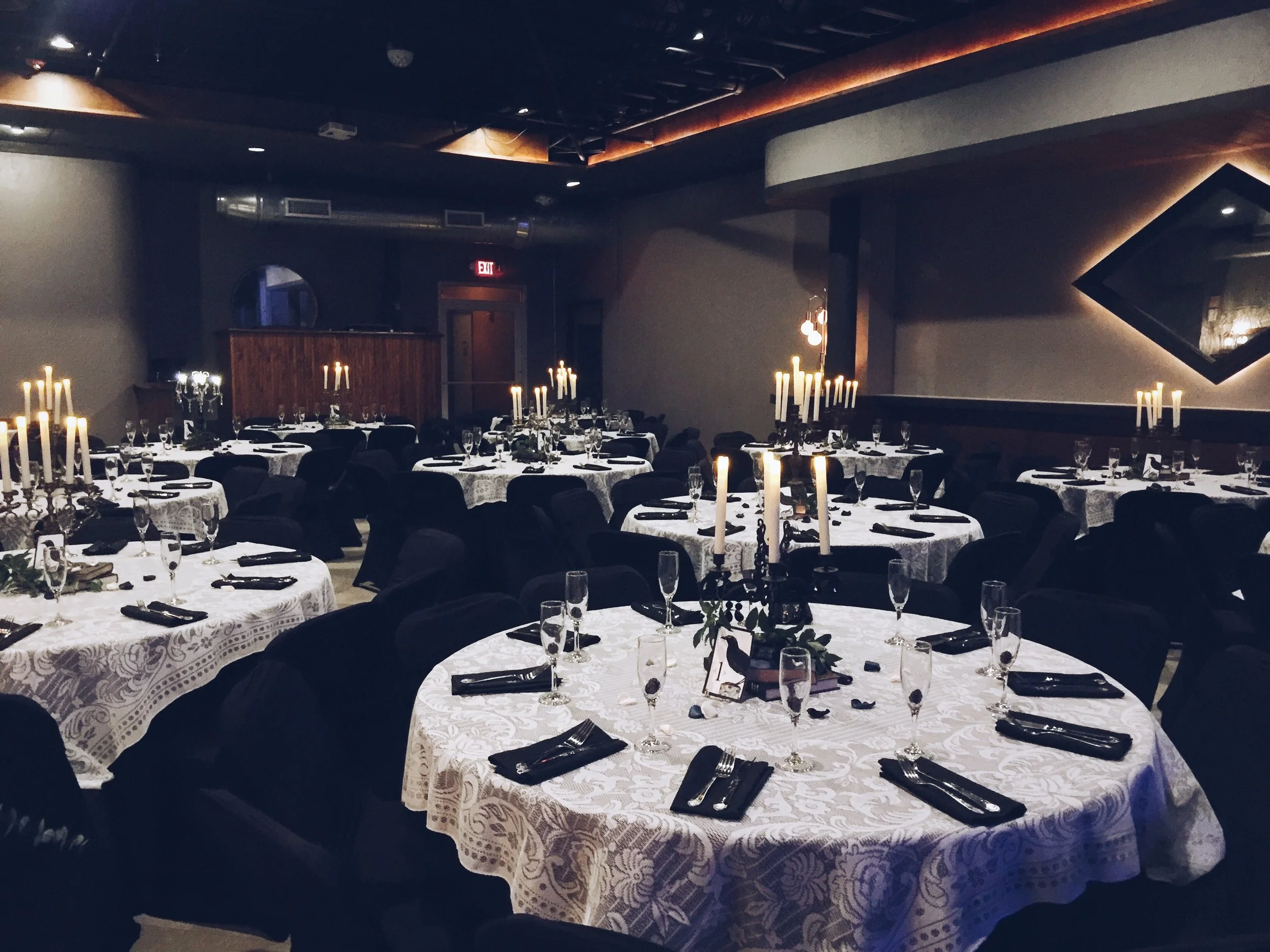
The venue gallery is a useful first check on sightlines and practical layout. Look for where guests sit relative to the stage, speakers and bar, then plan microphone positions around those fixed features rather than placing them after the catering and furniture are set. The flexible floor can suit a two-person interview, panel or host-plus-audience format, but each uses the room differently.
Noise will usually come from the operating venue rather than the microphone itself. Main Street traffic, delivery doors, glassware at the full-service bar, kitchen activity, air conditioning and people greeting one another can all enter an open recording. Record the room during the planned setup window, note interruptions, and place quiet work away from the bar while keeping talent within easy reach of the technician.
Portable acoustic treatment can help, yet it must be safe for guests and acceptable to the venue. Ask about supplied soft furnishings before bringing panels, blankets or stands. In Gainesville's summer, thunderstorms and heavy rain can affect loading access and power planning, so the arrival plan needs more buffer than a mild-weather estimate. A paused broadcast is preferable to a recording ruined by a door opening onto the street.
Carrying an Australian workflow to Florida
At home, Australian podcast teams may produce for independent audiences, the Australian Podcast Awards, ABC, SBS or commercial radio networks. Those outlets reward intelligible speech, clean levels and reliable delivery, much as a live event does. Keep a natural Australian accent and conversational cadence intact; editing should remove collisions, noise and long pauses rather than push every voice toward an American broadcast norm.
Power deserves particular attention. Australian mains are nominally 230 volts at 50 hertz, while Florida uses 120 volts at 60 hertz. A dual-voltage charger may work on both, yet a mains-frequency device, proprietary wireless pack or audio interface may not. Check specifications before the trip, and budget for sales tax, GST on returned purchases, shipping and any import charges rather than assuming a cheap American recorder will be cheap at home.
Bring a labelled patch plan, confirm the clean-feed route during the soundcheck, capture room tone and keep redundant local copies of every finished take. The practical takeaway is to treat The Wooly's on-site audio as live reinforcement rather than a turnkey studio, with a known signal chain, an isolated recording path and tested backups.
Follow the Calendar
News, ticket links, and last-minute additions posted across our channels.
Explore the Venue
Five pages covering the full run of programming and private bookings.
Browse the schedule for movie showings, live music, and art shows.
Weddings, holiday banquets, cocktail parties, and anniversaries.
Meetings, networking, luncheons, and fundraisers with AV support.
Concerts, film screenings, art showcases, and community pop-ups.
Photos from past concerts, private functions, and gatherings.