Live shows, movie nights, art openings, private parties, and corporate meetings at 20 N Main St — minutes from the University of Florida and Shands Hospital.
Stay in the Loop
Get the next show, screening, and event announcements sent to your inbox.
Inside the Room
A look at the stage, the floor, and the nights that move through them.

Planning a weeklong conference at The Wooly
Booking The Wooly for a weeklong conference residency begins with a clear decision about how the venue will function during the week. Will delegates occupy it as a closed, private meeting space, or will selected sessions sit alongside the venue’s normal live entertainment? Both models can work, but they affect access, security, branding, ticketing and the number of staff required. Settling that distinction early prevents a promising date from being held under the wrong operating assumptions.
The Wooly is at 20 N Main Street in downtown Gainesville, close to the University of Florida and Shands Hospital. Its flexible floor plan, professional audio-visual support, in-house catering and full-service bar suit a multi-day event, while its central location can make several short programme blocks practical. A strong booking plan treats the residency as a working venue, not simply a hotel conference room with a stage attached.
Shape the residency before requesting dates
Write a one-page brief that states preferred dates, expected attendance, daily hours, overnight storage needs, public access, staging, catering and budget. Include the difference between the maximum crowd and the number likely to be present at once, plus whether delegates need green rooms, registration desks, breakout rooms or a secure equipment area. This gives The Wooly enough detail to test operational feasibility and return a useful multi-day proposal rather than a basic room rate.
A conference website from a previous cycle can help benchmark the delegate journey. The APAA 2017 event site is a useful historical reference for checking how programme information, registration pathways and practical updates were presented. For a new residency, apply that lesson to one live information hub, with the venue address, session times, accessibility contacts and changes to the running order kept in one place.
That brief should also name the outcomes that justify a whole-week footprint: pre-conference meetings on Monday, plenary sessions, workshops, sponsor demonstrations, a public arts component, networking evenings and a managed breakdown on Sunday. A smaller, sharper pattern is easier to staff and protect than a schedule that treats every hour as equally important.
Check Gainesville timing and the venue calendar
Availability is more than an empty diary. Review The Wooly’s music and arts calendar and ask which public events, private hires, rehearsals or community programmes may overlap with the proposed residency. If conference sessions run beside regular programming, agree on entrances, shared corridors, washrooms, food service, signage and who controls each space at every changeover. If the week must be exclusive, state that clearly in the brief and agreement.
For Australian organisers, the time difference deserves a prominent place in the schedule. Gainesville can be roughly 14 to 16 hours behind Sydney, Melbourne and Brisbane, depending on daylight-saving dates, so hybrid speakers and remote production calls need rehearsed connection windows rather than casual assumptions. Delegates travelling from those cities should also receive a concise entry checklist covering passport validity, current US visa or waiver requirements, insurance and airport-to-downtown transfers. Most Australian flights will connect through a US gateway, making the final transfer particularly important to communicate. Requirements can change, so official government advice should remain the source for every traveller.
Negotiate the commercial agreement for an Australian booker
Ask for an itemised quote that separates venue hire by day, staffing, audio-visual labour, equipment, catering, bar service, security, cleaning, signage, parking and any minimum spend. It should also state deposits, payment dates, taxes, service charges, overtime, cancellation terms and the consequences of reducing the audience or changing the hours. A residency quoted only as a weekly total can conceal expensive assumptions about each session.
Australian teams often need the US tax position checked against their own obligations. Any Australian tax invoice may need to show 10% GST, and an ABN may be required for a business-to-business transaction, but neither replaces advice on any US sales tax attached to the venue hire. The venue should confirm what its invoice includes and whether the Australian entity can claim input GST only with appropriate documentation. Also request details of card surcharges, international wire fees and the currency in which settlement must occur.
Treat the contract as the final version of scope. Public liability insurance, worker compensation arrangements, accessibility compliance, music and film licences, cancellation caused by a speaker or airline disruption, and responsibility for damage should all be allocated in writing. For a mixed public-and-private programme, identify who owns ticket income, sponsor revenue and bar takings, and how refunds, weather or an emergency closure are handled.
Design the floor plan and production around the audience
Ask for a scaled floor plan at each configuration: plenary, breakout, registration, hospitality and exhibition. Walk through sightlines from every seat, the route to accessible toilets and exits, stage and lighting positions, power distribution, data connections, loading access and storage for overnight equipment. The number of people a room can legally hold is not automatically the number it can hold comfortably for a full day, particularly once cameras, catering tables and standing areas are added.
The Wooly’s corporate events information provides a practical starting point for discussing professional delivery with its team. Confirm which technicians are included, their call times, and whether rehearsal time is charged. Give the production supplier a written brief with cue sheets, microphone and confidence-monitor requirements, projection formats, streaming destinations and recording consent. Any additional internet capacity, cameras, interpreters or hearing-support systems should be tested in advance rather than assumed to be part of the standard package.
Build a minute-by-minute changeover plan. A hospitality break may require microphones to be muted, stage lighting lowered and refreshments cleared before a keynote; a sponsor demonstration may need the opposite. Include contingency time for late arrivals, overrun sessions and an audience move between room layouts. One production lead should own the master schedule, while the venue lead retains authority over safety, building systems and final room release.
Plan catering and bar service around delegate expectations
Use the first meeting to understand menu cycles, dietary handling, service timing, staffing levels and the cost of upgrades or special menus. For a multi-day stay, rotating lunch options can reduce repetition, while scheduled coffee points keep refreshments available between rooms. Many Australian teams expect morning tea or afternoon coffee as a formal part of the working day, so compare that rhythm with Gainesville schedules and delegate preferences before finalising the package.
Dietary communication should be precise. Ask how the kitchen distinguishes allergens from preferences, prevents cross-contact, labels vegan, vegetarian and gluten-free choices, and handles changes made close to service. Provide a single master list rather than relying on one PDF circulating through several Australian teams. Local ingredient availability is usually manageable, but specialised requirements may need advance sourcing and should be priced before they become urgent.
The full-service bar offers a separate set of choices for receptions and evening events. Confirm package levels, consumption or minimums, service fees, non-alcoholic options, responsible-service controls, closing time and whether staff can reset the bar between a corporate session and a public performance. Also plan for comfort between programmes: reliable Wi-Fi, charging access, quiet work areas, water stations, coat storage and clear directions to downtown transport and nearby medical facilities.
Build a public programme that benefits from the setting
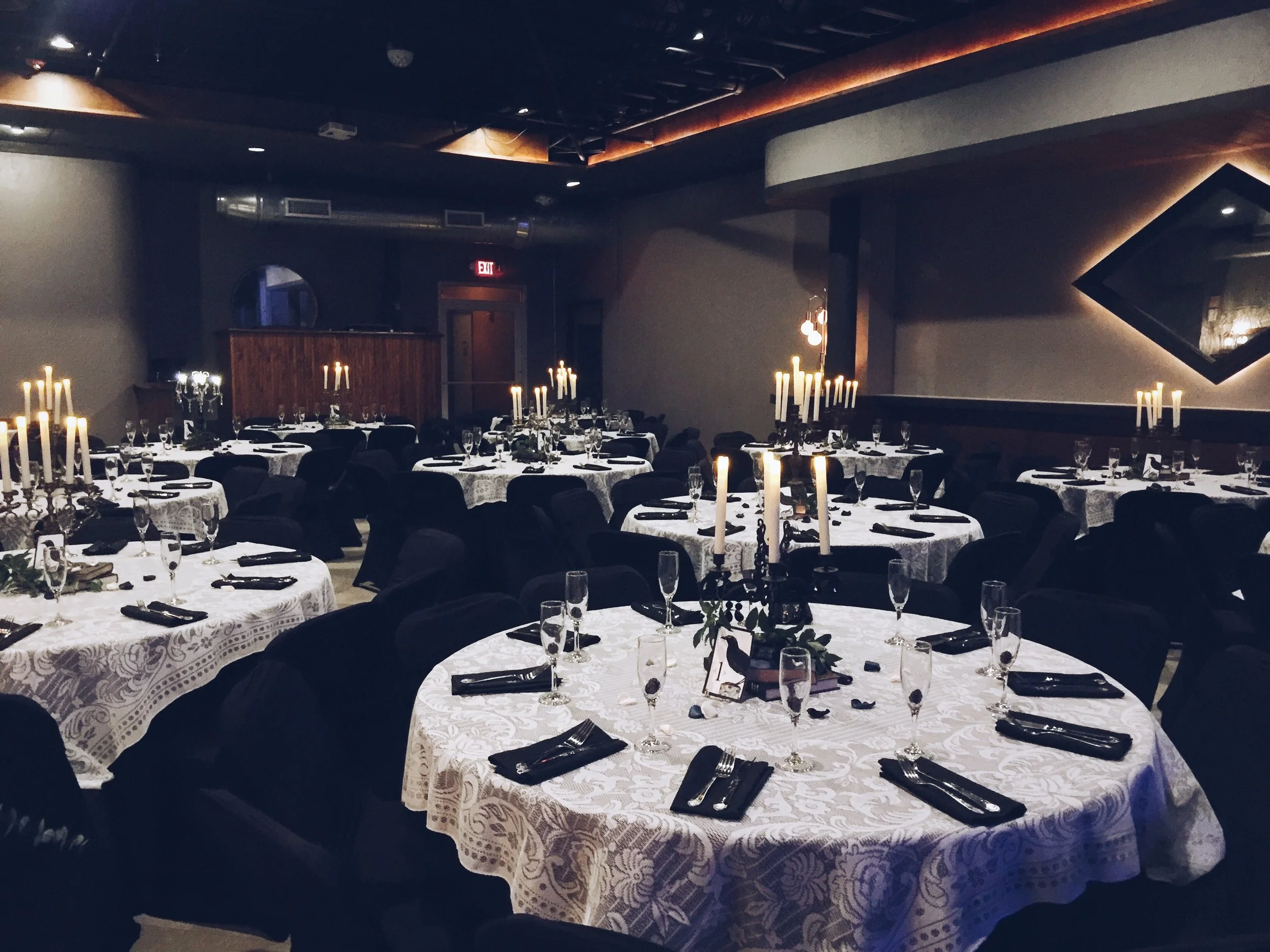
The Wooly’s identity can make a conference feel more like a cultural event than a hotel meeting. A live set, local artist collaboration, film screening or exhibition can attract community attendees and create a natural evening programme, provided the conference remains the priority when contracts and room resets are affected. The venue’s Halloween party setup demonstrates how its rooms can be transformed for a themed occasion, a useful reference for a branded welcome night or departure party.
Give each public-facing component its own operating plan rather than adding it informally to the conference schedule. Include ticketing, age restrictions, security, accessibility, alcohol service, rights clearance, photography consent and a clean transition from delegate sessions to guests. The resulting week should feel purposeful: each public element should support the meeting’s subject, give delegates a shared experience, or provide a legitimate networking setting.
Lock in a practical booking sequence
Start with a concise inquiry and a provisional calendar window, then request a video walkthrough, floor plan and written quote. Move to a formal hold only after checking the venue calendar and negotiating the operating model. The final sequence is to approve scope and costs, execute the agreement, lodge the deposit, confirm suppliers, issue delegate information and hold a production meeting close to the event. Keep every approval timestamped so venue, conference and supplier teams work from the same version.
A useful set of booking actions is:
- Define the operating model: Record whether the residency is exclusive, partially public or made up of discrete private hires.
- Protect the commercial terms: Put daily rates, minimums, taxes, deposits, cancellation rights and overtime rates in the agreement.
- Test capacity and compliance: Confirm legal occupancy, accessible routes, exits, fire procedures, insurance and security coverage.
- Freeze the floor plan: Obtain scaled layouts for plenary, breakouts, registration, catering, exhibitions and equipment storage.
- Approve food and beverage early: Lock menus, dietary controls, bar packages, staffing and service times before final numbers harden.
- Rehearse remote participation: Set agreed connection windows and technical checks for delegates and speakers travelling from Australia.
- Issue one delegate guide: Distribute entry guidance, venue details, session times, local transport, accessibility contacts and a single update channel.
Before the first delegate arrives, convene the venue, organisers, caterer and AV supplier for a final run-through. Resolve access, keys, signage, payment reconciliation, incident contacts and end-of-night responsibilities, then issue the final week schedule. That preparation reduces the small uncertainties that otherwise consume staff time during a long event.
In practical terms, securing the dates, operating model and commercial terms first allows the floor plan, production, catering and delegate communication to follow one agreed plan. That sequence gives an Australian team a controlled path to a productive week at The Wooly and avoids leaving essential decisions until everyone is in Gainesville.
Follow the Calendar
News, ticket links, and last-minute additions posted across our channels.
Explore the Venue
Five pages covering the full run of programming and private bookings.
Browse the schedule for movie showings, live music, and art shows.
Weddings, holiday banquets, cocktail parties, and anniversaries.
Meetings, networking, luncheons, and fundraisers with AV support.
Concerts, film screenings, art showcases, and community pop-ups.
Photos from past concerts, private functions, and gatherings.